

Your One-Stop Partner for Premium Chemicals, Lab Instruments & Process Solutions.


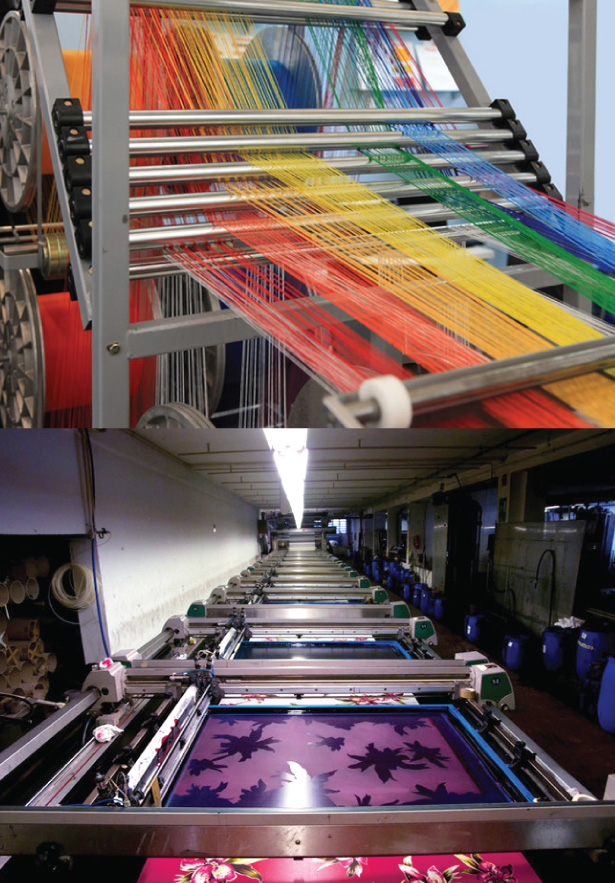
Khan Associates supplies concentrated chemical raw materials to textile chemical manufacturers and formulators in Pakistan, along with processing auxiliaries, water treatment chemistry and effluent treatment chemicals used inside textile mills. Most of the range listed on this page is sold as high-concentration raw material for blending into finished textile auxiliaries — not as ready-to-dose branded programs — which is why grades, strengths and consistency matter more here than brand names on a drum.
We have supplied Pakistani industry since 1994 from offices in Lahore and Karachi, and hold authorised distribution rights for 12 international manufacturing principals. Textile buyers reach us through two different routes: formulators buying tonnage raw material, and mills buying treatment chemistry for their own utilities and effluent plants. Both are covered below.
The products listed on this page fall into four distinct categories. Keeping them separate matters, because a chemical that belongs in a cooling tower has no business in a dyebath, and vice versa.
Textile chemicals sit alongside five other categories in our full product range, and several raw materials on this page overlap with our water treatment listing because the same concentrates serve both markets.
This is the core of what we supply to textile chemical manufacturers, antiscalant blenders and auxiliary formulators in Pakistan. These materials are bought by the drum or IBC and diluted, neutralised or blended into finished products under the buyer’s own label.
Phosphonates and Chelating AgentsWhat they are: Organophosphonic acids and their sodium salts — HEDP 60%, HEDP-Na4 80%, DETPMPA 50% (also written DTPMPA), ATMP 50%, PBTCA 50% and HPAA 50%. Function: They sequester calcium, magnesium, iron and manganese ions, inhibit scale formation at sub-stoichiometric (threshold) dosages, and stabilise metal surfaces against corrosion. PBTCA is the more chlorine-tolerant of the group; HPAA is used primarily as a mild-steel corrosion inhibitor rather than a carbonate scale inhibitor. Textile relevance: Two separate uses. In auxiliary formulation, phosphonates are the active base of sequestering agents and peroxide bleach stabilisers — trace iron and copper in hard process water decompose hydrogen peroxide violently during bleaching, causing pinholes and uneven whites. In mill utilities, the same molecules are the working ingredient in cooling water and RO antiscalant programs. HEDP-Na4 is the neutralised salt form, used where a low-acid or solid-dosing formulation is needed. We supply the phosphonate range as the authorised Koye Chemical distributor in Pakistan, with technical data sheets and batch documentation. | Polycarboxylate Scale Inhibitors and Dispersant PolymersWhat they are: PAA 50% (polyacrylic acid), PAAS 48% (sodium polyacrylate), Co-Polymer MA/AA 50% (maleic–acrylic acid), Terpolymer AA/AMPS 44% (acrylic acid with sulfonated AMPS monomer), HPMA 50% (hydrolysed polymaleic anhydride) and PCA 50% (phosphino-carboxylic acid). Function: Low-molecular-weight anionic polymers that disperse suspended solids, distort scale crystal growth and keep hardness salts, iron oxide and silt in suspension. Sulfonated grades such as AA/AMPS hold up better in high-hardness and high-iron water than plain polyacrylates; HPMA performs at higher temperatures; PCA combines phosphonate and polycarboxylate behaviour with good chlorine tolerance. Textile relevance: Formulators use these as the dispersant backbone in sequestering agents, dyebath dispersants and boiler and RO antiscalant blends. In practical terms they are what stops dispersed pigment, hardness precipitate or hydrolysed dye from re-depositing on fabric or fouling membranes. |
Yellow-Metal Corrosion InhibitorsWhat they are: Benzotriazole (BTA) crystal 99% and 50% solution, and Tolytriazole sodium salt (T.T.Na) 50%. Function: Azole film-formers that adsorb onto copper and copper-alloy surfaces and block corrosion. Textile relevance: These are utility-side, not process-side. They protect brass and copper heat exchangers, condensers and cooling circuit components in textile mill cooling water systems, and are a standard component of cooling water inhibitor formulations. They are supplied here as raw material for water treatment formulators. | Biocides and Microbial Control Raw MaterialsWhat they are: Quats (biocide) 40% and BKC (benzalkonium chloride) 50%, Isothiazolinones 14%, Biocide SDD 42% (sodium dimethyldithiocarbamate) and DBNPA base 99% and 20%. Function: Non-oxidising microbicides with different behaviour profiles. Quats and BKC are cationic surfactant biocides with surface-active and dispersing action on biofilm. Isothiazolinones at 14% are the standard in-can preservative concentrate for water-based formulations. SDD is a carbamate biocide used in industrial water and in slime control. DBNPA acts quickly and hydrolyses quickly, which is why it is preferred where a short residual is wanted, including membrane systems. Textile relevance: Three genuine applications. First, in-can preservation — textile auxiliaries such as thickeners, softener emulsions and print pastes are water-based and spoil without a preservative; isothiazolinones are the usual answer. Second, control of bacteria, fungi and algae in mill process water, cooling towers and storage tanks. Third, biofouling control on RO membranes feeding the dyehouse. Formulators also blend these concentrates into their own branded biocide products. |
Cationic Polymers for Dye Fixing and Colour RemovalWhat they are: Polyamine for fixer 50%, PolyDADMAC for fixer 46% (poly-diallyldimethylammonium chloride) and Fixer formaldehyde base 50%. Function: High-charge-density cationic polymers. On fabric, they form ionic bonds with the anionic sulfonate groups of reactive and direct dyes, locking dye onto the fibre. In water, the same cationic charge neutralises dissolved anionic dye and drives it out of solution. Textile relevance: This is the raw material base for dye fixing agents used after reactive and direct dyeing on cellulose, where they improve wet fastness and reduce bleeding during washing. Formaldehyde-based fixers remain in use for cost and performance reasons, but buyers exporting to markets with free-formaldehyde restrictions typically specify the formaldehyde-free polyamine or PolyDADMAC route instead — worth confirming against your customer’s testing requirement before you formulate. The same polymers double as effluent decolourants. | Polyacrylamide, Polyelectrolytes and AntifoamWhat they are: Polyacrylamide / polyelectrolyte in anionic, cationic and non-ionic grades, and silicone-based antifoam 50%. Function: Polyacrylamides are high-molecular-weight flocculants that bridge destabilised particles into settleable or filterable floc; charge type is selected by the nature of the solids. Silicone antifoam is a polydimethylsiloxane emulsion that collapses foam by disrupting the film between bubbles. Textile relevance: Polyacrylamides are used almost entirely on the effluent side — clarification and sludge dewatering at the mill ETP. Antifoam works on both sides: foam control in jet and soft-flow dyeing machines and in wash boxes, and foam suppression in aeration tanks and DAF units at the effluent plant. We supply Japanese-manufactured flocculant grades as the authorised MT AquaPolymer distributor in Pakistan. |
These products are used in the dyehouse and finishing department rather than in a formulator’s reactor. They are listed here as supplied — specifications, active content and compatibility should be confirmed against the technical data sheet for the grade you are quoted.
Process water quality determines dyehouse output as directly as any auxiliary. Hardness causes precipitation and shade variation, iron causes staining and peroxide breakdown, scale on RO membranes and boiler tubes cuts throughput and steam efficiency, and biofouling blocks the lot.
For these duties we supply RO antiscalant (Kem 260) alongside the phosphonate and polycarboxylate concentrates listed above, plus azole corrosion inhibitors for cooling circuits and non-oxidising biocides for membrane and cooling tower microbial control. Silicone antifoam is used where entrained surfactant carries over into the utility system. Our complete utility range, including coagulants for canal and raw water clarification, is set out on our chemicals for water treatment page.
Textile dyeing effluent is difficult to treat because reactive dye hydrolyses in the bath and the unfixed fraction leaves in the wash water as dissolved, non-settleable colour. Conventional coagulation removes turbidity and some COD but leaves the effluent visibly coloured, which is the parameter mills are most often pulled up on under NEQS discharge limits enforced by Punjab EPD and Sindh EPA.
The chemistry that addresses this is cationic: a decolouring agent or PolyDADMAC-type polymer to neutralise and precipitate dissolved anionic dye, followed by a coagulant and an anionic or cationic polyacrylamide to build floc and dewater the resulting sludge. As the authorised Bluwat distributor in Pakistan we supply BWD-01 decoloring agent for exactly this duty, and the wider program is detailed on our chemicals for waste water treatment plants page.
Not every product on this page touches fabric. Mapped against the process, the relevant points are:
The raw material range is bought by textile chemical manufacturers, auxiliary formulators and water treatment chemical blenders, generally by procurement acting on a formulation chemist’s specification. The processing chemicals and utility and effluent chemistry are bought by textile mills, dyeing and printing units and processing houses — typically by the dyeing master, process engineer, ETP in-charge or utilities manager, with procurement handling the order.
Geographically, demand concentrates around Pakistan’s processing clusters: Faisalabad for woven processing and home textiles, Karachi and Lahore for large integrated and knit processing, and Multan and Sialkot for their own textile and garment bases. We supply nationwide from Lahore and Karachi.
Send the enquiry with enough detail to get a usable answer first time. For raw material, that means the product name and grade, the strength you formulate at, approximate annual or monthly volume, and packing preference. For processing chemicals, tell us the substrate, machine type and process stage. For utility or effluent chemistry, share your water analysis or effluent profile, current treatment setup and the discharge parameter you are trying to meet.
We will confirm availability, issue the technical data sheet for the grade, and provide a formal quotation. Where the application is water or effluent treatment, we will jar test your sample before recommending a dosage. Enquiries are answered within one working day.
Both, but the larger part of this range is concentrated raw material for textile chemical manufacturers and formulators. Finished auxiliaries such as cationic softener, dispersing agent, anti-creasing agent and wash off are supplied as listed.
Concentrated actives — phosphonates, polycarboxylate polymers, cationic polymers, biocides, azoles and silicone antifoam — that formulators dilute, neutralise and blend into finished textile auxiliaries and water treatment products sold under their own brand.
Cationic softener, sequestering agent, dispersing agent, anti-creasing agent, wash off agent and the dye fixer range. The phosphonates, polycarboxylates, azoles and flocculants are formulation raw materials or water treatment chemicals rather than process chemicals applied to fabric.
A cationic polymer applied after reactive or direct dyeing that bonds with anionic dye on the fibre to improve wet fastness. Polyamine and PolyDADMAC are formaldehyde-free routes; formaldehyde-base fixers are still used where the end market permits. Check your customer’s free-formaldehyde limit before selecting.
It binds calcium, magnesium, iron and manganese in the process water so they cannot precipitate with dyes and surfactants, cause uneven shades, or catalyse the breakdown of hydrogen peroxide during bleaching.
In two places. As the active base of sequestering and peroxide-stabilising auxiliaries, and as scale and corrosion inhibitors in the RO plants, boilers and cooling circuits that supply the mill with process water and steam.
A dispersing agent keeps insoluble particles — disperse dye, pigment, precipitate — evenly suspended so they do not agglomerate or deposit. A sequestering agent binds dissolved metal ions so they never form a precipitate in the first place.
To preserve water-based auxiliaries in the can, to control bacterial and algal growth in process water tanks and cooling systems, and to prevent biofouling on RO membranes feeding the dyehouse.
Cationic decolouring agents and PolyDADMAC-type polymers, which neutralise dissolved anionic dye so it can be precipitated and removed, usually followed by a coagulant and a polyacrylamide flocculant for floc formation and sludge dewatering.
Charge type. Anionic grades suit inorganic and mineral solids, cationic grades suit organic and biological sludge and are standard for dewatering, and non-ionic grades cover neutral systems. The correct grade is determined by jar testing on your actual sludge, not by catalogue selection.
Yes. Anti-creasing agent is on our supplied range for rope-form processing on jet, soft-flow and winch machines, where crease and rope marks set permanently at temperature.
Yes. Technical data sheets are provided for the specific grade quoted, along with batch documentation on supply. Ask for the TDS at enquiry stage so your formulation chemist can review compatibility before you commit.
Tell us which products you need, the grade and strength you work at, and your volume or process detail, and our technical team will confirm availability and issue a formal quotation. Reach us by phone, WhatsApp or the enquiry form on our contact page, and we will respond within one working day.
Khan Associates
Lahore Corporate Office: 184 S, Quaid-e-Azam Industrial Estate, Kot Lakhpat, Lahore, Pakistan. +92-42-35146680-83
Karachi Office: 908-909, 9th Floor, Portway Trade Centre, Plot 189/A, S.M.C.H.S, Main Shahrah-e-Faisal, Karachi, Pakistan. +92-21-34540251-52, info@khanassociates.net