

Your One-Stop Partner for Premium Chemicals, Lab Instruments & Process Solutions.


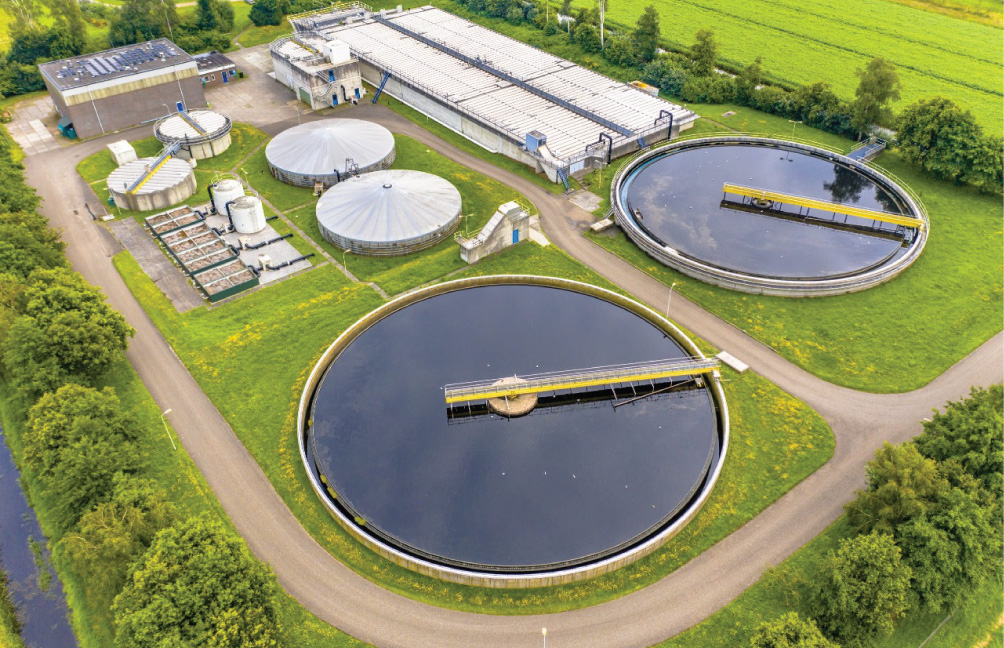
Khan Associates supplies coagulants, flocculants and specialty polymers to effluent treatment plants across Pakistan. We have been importing and supplying industrial treatment chemistry since 1994, and the range on this page covers the full chemical workflow of an ETP: coagulation, colour removal, flocculation, dissolved air flotation, biological system support, and sludge thickening and dewatering.
An effluent treatment plant is a separation process, not a destruction process. Chemicals do not make contaminants disappear. They change the physical state of dissolved and colloidal material so that it can be pulled out of the water and handled as sludge. Understanding which chemical does which job, and at which stage, is what separates a treatment programme that holds its discharge numbers from one that consumes chemicals without improving results.
We are an importer, stockist and authorized distributor, not a repacker. Products are supplied with technical data sheets and batch documentation, and grade selection is established through jar testing on your own effluent before plant-scale supply.
Most industrial ETPs in Pakistan run some combination of the following stages. Not every plant has all of them, and the chemistry required depends entirely on what is in the effluent.
Chemistry enters at four of these points. The sections below are organised by function rather than by product name, because the same polymer family can serve more than one duty at different charge densities.
Coagulants for Chemical TreatmentSuspended and colloidal particles in effluent carry a negative surface charge that keeps them apart and prevents them from settling. A coagulant neutralises that charge so the particles can come together. This is the first chemical step, and getting it wrong makes everything downstream worse. PAC (Poly Aluminium Chloride)PAC is the inorganic coagulant most commonly used in Pakistani ETPs. It works by charge neutralisation and by forming aluminium hydroxide precipitate that sweeps fine particles out of suspension. It is effective across a broad range of industrial effluents and is usually the reference point against which other coagulation options are compared. We supply PAC through our Bluwat distributorship in Pakistan, including spray-dried grades. Organic coagulants such as polyDADMAC and polyamine are also available where a plant wants to reduce inorganic coagulant consumption and the volume of chemical sludge it generates. | Colour Removal for Dyeing and Printing EffluentColour is a separate problem from turbidity. Dye molecules in reactive, acid and disperse dyebath effluent are dissolved rather than suspended, so a conventional coagulant dose that clears turbidity may still leave the water visibly coloured. Colour is also one of the parameters most likely to attract attention during an inspection, because it is the one anybody can assess without a laboratory. Polyfloc-L / BWD-01BWD-01, supplied on this page under the designation Polyfloc-L, is a water decoloring agent manufactured by Yixing Bluwat Chemicals. It is a quaternary cationic polymer that neutralises the charge on dissolved dye molecules and precipitates them into a separable floc, which is then removed by sedimentation or by air flotation. Two practical points matter when using it. It can be combined with PAC to reduce overall treatment cost, but the two should not be pre-mixed, and the dosing sequence needs to be established by jar test rather than assumed. It also generates noticeably less sludge than an equivalent inorganic coagulant dose, which matters when sludge disposal is a running cost rather than an afterthought. This product is directly relevant to dyeing houses, printing units and processing mills. Our textile processing chemicals range covers the production side of the same operations. |
Flocculants and Polymers for Solids SeparationCoagulation destabilises particles. Flocculation grows them. A flocculant is a long-chain polymer that bridges destabilised particles into flocs large and strong enough to survive the hydraulic conditions in a clarifier or flotation cell. Anionic, cationic and nonionic grades exist because different effluents and different solids require different charge and molecular weight. Accofloc A 2125 / Polymer A 2125Accofloc A 2125 is used as a flocculant and settling aid in chemical treatment, and as a flocculant in the biological system where solids need help settling in the secondary clarifier. ACCOFLOC is the emulsion polymer flocculant series from MT AquaPolymer, Inc. of Japan, for whom Khan Associates is the authorized distributor in Pakistan. Emulsion grades dissolve faster than powders and are easier to automate, which suits plants running continuous dosing systems. The MT AquaPolymer lineup runs to more than a hundred grades across powder and emulsion forms. The grade that works on your effluent is a question for the jar test, not the catalogue. | Polymers for DAF UnitsDissolved air flotation works in the opposite direction to a settling clarifier. Fine air bubbles attach to the floc and carry it upward, where it is skimmed off as float. DAF suits effluents where the solids are light, greasy or slow to settle, which describes a large share of textile, food and processing wastewater. A DAF unit needs floc that is receptive to bubble attachment and strong enough to hold together on the way up and across the skimmer. That is a different requirement from a settling floc, which is why flotation grades and settling grades are not interchangeable. Accofloc A 110 / Polymer A 110Accofloc A 110 is used as a flotation aid, assisting quick and complete flotation of sludge in DAF operation. Where a plant runs chemical treatment ahead of the DAF, it is normally dosed after the coagulant so that flocculation and flotation happen in the right order. |
Polymers That Support Biological TreatmentThis section needs a clear boundary. A polymer does not perform biological treatment. The organic load is consumed by the microbial population in the aeration basin, and nothing dosed from a drum replaces that. What polymers do is help the biomass form, settle and stay in the system, which is what allows biological treatment to work properly in the first place. Poor sludge settling in the secondary clarifier is one of the most common failures in industrial ETPs. When biomass carries over into the final effluent, both suspended solids and measured COD rise, even though the biology is doing its job in the aeration basin. Quct C 40 / Polymer C-40Polymer C-40 is a cationic polymer used in biological systems as a sludge building aid and settling aid. By helping fine dispersed biomass aggregate into settleable sludge, it improves clarifier performance and reduces the solids carried over into the discharge. Polymer C 8085Polymer C 8085 is used in biological systems as a settling aid and as a sludge thickening agent, supporting both the secondary clarifier and the thickener that feeds the dewatering equipment. Polyfloc-PPolyfloc-P works as a quick sludge building agent in biological systems, and is particularly useful during plant commissioning, when the biomass population has not yet established itself and settling is unreliable. It is also used in combination with Polyfloc-L. Commissioning is the period when most ETPs struggle to meet their discharge numbers, and having a sludge building aid available shortens that window. | Polymers for Sludge Thickening and DewateringDewatering is where treatment chemistry meets the disposal budget. Sludge leaving a clarifier is mostly water. Every percentage point of dry solids gained on the filter cake reduces the tonnage that has to be trucked off site, and disposal is charged by weight and volume. Dewatering polymers are typically high-charge cationic grades, selected to match the sludge rather than the equipment alone. The polymer must flocculate the sludge, release water quickly under pressure or centrifugal force, capture a high proportion of the solids, and let the cake release cleanly from the belt or bowl. We supply cationic ARONFLOC and ACCOFLOC dewatering grades from MT AquaPolymer for belt presses, decanter centrifuges and screw presses, alongside Blufloc polyacrylamide grades from Bluwat. Because sludge from a dyeing unit behaves differently from sludge from a food plant or a tannery, we select the grade by testing your actual sludge rather than by application category. |
Suppliers describe products as COD removal chemicals, and the phrase deserves an explanation, because it is the source of a great deal of disappointment at plant level.
No coagulant or polymer oxidises COD. What a cationic coagulant or decoloring agent does is destabilise dissolved and colloidal organic matter, including dye molecules, so that it precipitates and can be separated. The organic load is not destroyed. It moves from the water into the sludge, and the COD measured in the treated effluent falls as a result. That is a real and useful reduction, but it comes with more sludge to handle.
In the biological system the mechanism is different again. Microorganisms genuinely consume organic load. When a settling aid improves clarifier performance, the effluent COD figure improves because less biomass is escaping into the sample, not because the polymer removed anything itself.
Both effects are worth having. Neither is a substitute for correct process design. Any supplier quoting you a fixed COD reduction percentage before seeing your effluent is quoting a marketing figure, and the honest answer is that the achievable reduction depends on what the COD consists of, the pH, the stage at which it is treated and the dose.
Polymer selection is not a catalogue exercise. Two plants in the same industry, running the same process, can need different grades because their water source, dye recipes or production mix differ. These are the factors that actually decide it.
This is why jar testing exists. Our technical team runs jar tests on your actual effluent or sludge, compares grades side by side, and establishes a dose that holds up at plant scale before you commit to a supply arrangement.
We supply across Pakistan from our Lahore and Karachi offices, covering the industrial clusters of Punjab and Sindh.
Industrial effluent discharge in Pakistan is governed by the National Environmental Quality Standards for municipal and liquid industrial effluents, notified under the Pakistan Environmental Protection Act and enforced provincially by Punjab EPD, Sindh EPA and their counterparts. The standards set limits across more than thirty parameters, including pH, biochemical oxygen demand, chemical oxygen demand and total suspended solids.
Two practical points follow. Dilution is not a compliance route, since bringing effluent within limits by mixing in fresh water is explicitly not permitted. And limits are checked on measured values, so a plant needs its own reliable analysis rather than a supplier’s assurance. We supply the laboratory instruments and reagents used for COD, BOD, turbidity and suspended solids testing, and online monitoring instruments for continuous measurement.
Confirm the limits currently applicable to your sector and province with your provincial environmental agency, as standards and enforcement practice are periodically revised.
The more you can tell us about the effluent, the faster we can recommend the right chemistry. Useful details include:
Our team will respond with a recommendation and a formal quotation, including technical documentation, within one working day.
An industrial ETP typically uses coagulants such as PAC for charge neutralisation, flocculant polymers to grow separable flocs, flotation aids for DAF units, settling and sludge building aids in the biological system, decoloring agents where the effluent is coloured, and high-charge cationic polymers for sludge thickening and dewatering. Khan Associates supplies all of these categories in Pakistan.
Coagulation neutralises the negative surface charge that keeps fine particles dispersed, allowing them to come together. Flocculation then uses long-chain polymers to bridge those destabilised particles into larger flocs that can be settled or floated. Coagulation comes first; a flocculant dosed into effluent that has not been properly coagulated will underperform.
Poly Aluminium Chloride is an inorganic coagulant used to destabilise suspended and colloidal matter at the start of chemical treatment. It acts through charge neutralisation and through the aluminium hydroxide precipitate it forms, which sweeps fine particles out of suspension.
A DAF unit normally runs a coagulant followed by a flotation-grade flocculant. The flocculant must produce floc that air bubbles can attach to and that stays intact while rising and being skimmed. Accofloc A 110 is supplied as a flotation aid for this duty. A settling-grade flocculant is not a substitute.
Sludge dewatering normally uses high-charge cationic polyacrylamide, with the specific grade chosen to match the sludge and the equipment. We supply cationic ARONFLOC and ACCOFLOC grades from MT AquaPolymer and Blufloc grades from Bluwat for belt presses, decanter centrifuges and screw presses. Grade selection should be confirmed by testing your actual sludge.
They help the biomass aggregate and settle. Polymers do not carry out biological treatment, which is done by the microbial population in the aeration basin. A sludge building or settling aid improves floc formation and secondary clarifier performance, reducing the biomass that carries over into the final effluent.
Not by oxidation. Cationic coagulants and decoloring agents precipitate dissolved and colloidal organic matter so it can be separated, which lowers the COD measured in the treated water and increases the sludge produced. In a biological system, COD is consumed by microorganisms, and a settling aid improves the measured result by keeping biomass out of the effluent. Both are genuine reductions, but neither is chemical destruction of COD.
Cationic decoloring agents are the standard approach for dyeing and printing effluent. Polyfloc-L, the Bluwat BWD-01 water decoloring agent, is formulated for reactive, acid and disperse dye effluent and works by neutralising the charge on dissolved dye molecules so they precipitate and can be separated by sedimentation or flotation.
Yes, and combining them often reduces overall treatment cost on high colour and high COD effluent. They should not be pre-mixed, and the correct dosing sequence and ratio should be established by jar testing rather than assumed, as it varies with the effluent.
Selection depends on effluent characteristics, the type of solids, whether separation is by settling or flotation, the charge and molecular weight required, and the dewatering equipment installed. The reliable method is a jar test on your actual effluent or sludge, comparing candidate grades side by side. We conduct these before plant-scale supply.
Usually because of high inorganic coagulant dosing. Inorganic coagulants such as alum and PAC contribute their own precipitate to the sludge volume. Organic coagulants and decoloring agents generally produce less sludge for a comparable result, which is worth evaluating where disposal cost is significant.
The same core categories used internationally: PAC and organic coagulants, anionic, cationic and nonionic polyacrylamide flocculants, decoloring agents for dyeing effluent, and cationic dewatering polymers. What varies is the grade selection, which depends on the effluent rather than the country.
Yes. We supply industrial clients nationwide from our Lahore corporate office and Karachi office, with technical support and jar testing available from both locations.
Send us your effluent details and treatment setup, and our team will recommend the right chemistry with a formal quotation and technical documentation, within one working day.
Lahore Corporate Office
184-S, Quaid-e-Azam Industrial Estate, Kot Lakhpat, Lahore, Pakistan
+92-42-35146680-83
Karachi Office
908-909, 9th Floor, Portway Trade Centre, Plot 189/A, S.M.C.H.S., Main Shahrah-e-Faisal, Karachi, Pakistan
+92-21-34540251-52
khi@khanassociates.net
Email info@khanassociates.net or message us on WhatsApp at +92 301 4168242, 9:00 am to 5:00 pm.