

Your One-Stop Partner for Premium Chemicals, Lab Instruments & Process Solutions.


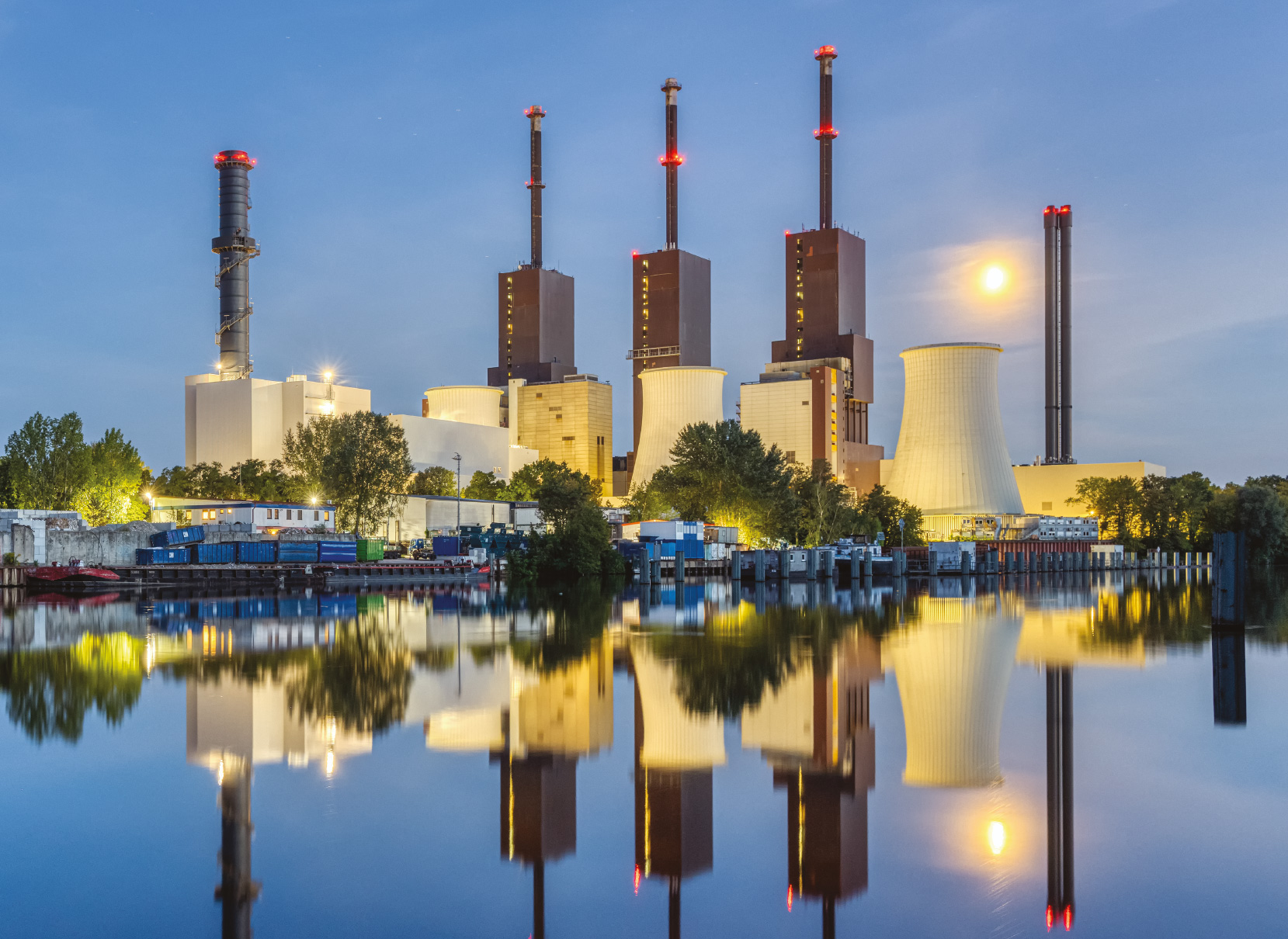
Khan Associates supplies industrial water treatment chemicals across Pakistan, and has done since 1994. The range covers two distinct requirements: finished treatment chemicals for plants treating their own water, and the active raw materials that water treatment chemical manufacturers and formulators blend into their own branded programmes.
Almost every industrial water system fights the same three problems. Hardness salts deposit as scale and destroy heat transfer. Dissolved oxygen and aggressive water chemistry corrode metal. Warm, nutrient-rich water grows biofilm that fouls surfaces and shelters corrosion underneath it. Different systems experience these problems differently, and a chemical that solves one of them in a cooling tower may be the wrong choice in a boiler or across an RO membrane.
We are an importer, stockist and authorized distributor, not a blender. What we supply is genuine material through the official channel, with technical data sheets and batch documentation, and technical support on selection.
It is worth being clear about this at the outset, because the same chemical name means different things to the two groups.
Water treatment chemical manufacturers and formulators buy actives in bulk: phosphonates, scale-inhibiting polymers, azoles, biocide concentrates and antifoams. These are ingredients, not dosing products. A formulator combines a phosphonate, a dispersant polymer, an azole and a biocide into a single branded cooling water programme, and needs consistent active content batch to batch because their formulation depends on it.
Plants treating their own water buy finished products: a coagulant and flocculant for canal water, an antiscalant for the RO skid, a biocide, a closed-loop corrosion inhibitor, activated carbon. These are dosed directly into a system.
Several items in our range serve both. Poly aluminium chloride is dosed straight into a clarifier by a plant, and bought by the tonne by formulators. The distinction matters when you enquire, because the specification, packing and documentation differ.
Canal and surface water in Pakistan carries seasonal silt, suspended solids and organic matter. Turbidity rises sharply during monsoon and after canal maintenance, so a treatment programme has to cope with a moving target rather than a fixed water quality. Clarification is the first stage, and everything downstream, filters, softeners, RO membranes and boilers, depends on it being done properly.
Polyaluminium Chloride (PAC)Poly aluminium chloride is the primary coagulant for canal and raw water. It neutralises the negative surface charge that keeps fine silt and colloidal particles suspended, and forms an aluminium hydroxide precipitate that sweeps finer material out with it as it settles. Compared with alum it generally works across a wider pH band, needs less alkalinity correction and produces a denser floc. We supply PAC, aluminium chlorohydrate and ferric sulphate through our Bluwat distributorship in Pakistan, in both spray-dried and liquid forms. | Accofloc A 2125Accofloc A 2125 is used as the flocculant after coagulation. Coagulation destabilises particles; flocculation bridges them into flocs heavy enough to settle in a clarifier at a practical rate. ACCOFLOC is the emulsion polymer flocculant series from MT AquaPolymer, Inc. of Japan, for whom Khan Associates is the authorized distributor in Pakistan. Because raw water quality shifts through the year, the grade and dose should be set by jar testing rather than fixed once and forgotten. Activated CarbonActivated carbon works by adsorption rather than by chemical reaction. It removes free chlorine, organics, taste and odour compounds from filtered water. In RO plants it is used in pretreatment specifically to strip residual chlorine before the feed reaches the membranes, because most thin-film composite membranes are damaged by oxidants. |
Scale is the precipitation of dissolved salts, most commonly calcium carbonate, calcium sulphate and silica, onto hot or high-pressure surfaces. A thin layer costs a disproportionate amount of heat transfer, so scale shows up first as rising fuel consumption or falling cooling capacity, long before anyone opens the equipment.
Antiscalants work at threshold dosages, far below the amount needed to chelate the hardness stoichiometrically. They interfere with crystal nucleation and distort the crystal lattice as it grows, so the salts stay dispersed instead of adhering.
Phosphonates are the backbone of most scale control programmes. Each has a different profile, which is why formulators keep several in stock rather than standardising on one.
Polymers do a different job from phosphonates. They disperse particulate matter and inhibit crystal growth by adsorbing onto crystal surfaces, and they keep iron and other metal oxides in suspension.
This is the point most product lists leave out, and it explains why a cooling water formulation is never a single chemical.
Phosphonates chelate calcium. In high-hardness water, dosed at a high enough rate, the calcium-phosphonate complex itself can become insoluble and deposit, which means an overdosed scale inhibitor starts causing the deposit it was meant to prevent. Dispersant polymers suppress that precipitation and keep the programme working. Terpolymers do this better than copolymers, and copolymers better than homopolymers.
The practical consequence is that more antiscalant is not better, and the phosphonate-to-polymer ratio matters as much as the total dose. Setting it needs a water analysis, not a rule of thumb.
Corrosion in industrial water systems is electrochemical. Dissolved oxygen, chlorides, low pH, high conductivity and the presence of dissimilar metals all accelerate it, and biofilm makes it worse by creating oxygen concentration cells underneath the deposit. Corrosion inhibitors work by forming a protective film on the metal surface, and different metals need different chemistry.
Benzotriazole (BTA) Crystal 99% and Tolytriazole (T.T.Na) 50% are copper and copper-alloy corrosion inhibitors. They form a thin protective film on copper surfaces, which matters in two ways. It protects condenser tubes and heat exchangers directly, and it stops dissolved copper ions from plating out onto steel elsewhere in the system, where they would set up galvanic corrosion. Any system with mixed metallurgy needs azole protection, not just the copper components. Tolytriazole is generally more tolerant of chlorine than benzotriazole.
The nitrite based corrosion inhibitor is for closed loops: chilled water circuits, hot water heating systems and closed cooling systems. Nitrite passivates steel and is effective at the relatively high residual concentrations a closed system can economically hold, because there is very little water loss.
This is a closed-system product, and the distinction is important. It is not suitable for open recirculating cooling towers, where continuous water loss makes the dose uneconomic and where nitrite acts as a nutrient for nitrifying bacteria, which consume it and drive the pH down. Closed loops also need their nitrite residual monitored, because a partially depleted level can be worse than none at all.
The acid inhibitor is used during acid cleaning and descaling rather than in normal operation. Acid removes scale efficiently, but it also attacks base metal. An inhibitor allows the acid to dissolve the deposit while limiting attack on the tube or vessel wall underneath.
Cooling towers are close to an ideal environment for microbial growth: warm water, oxygen, sunlight and a continuous supply of airborne nutrients scrubbed out of the air. The result is biofilm, and biofilm is a worse problem than the count of organisms in the bulk water suggests. It insulates heat transfer surfaces more effectively than mineral scale of the same thickness, it shelters microbially influenced corrosion underneath, and it protects the organisms inside it from biocide.
Treatment programmes usually alternate biocides rather than relying on one, because a resident population adapts to a single chemistry over time. The following non-oxidising biocides are supplied as actives to formulators and as finished products where appropriate.
Biocide selection depends on system pH, temperature, the presence of an oxidising biocide, discharge requirements and material compatibility. Not every biocide suits every system, and the RO case below is the clearest example.
Reverse osmosis is the least forgiving system on this page, because the membrane itself is the asset at risk and it cannot be inspected during operation. Two failures dominate: scaling on the concentrate side as recovery drives salts past saturation, and biofouling on the feed side, which raises differential pressure and cuts flux.
Membrane compatibility governs every chemical choice. Most thin-film composite membranes are oxidant-sensitive, which is why free chlorine is removed in pretreatment by activated carbon or a reducing agent, and why an oxidising biocide is not dosed to the membranes.
Confirm compatibility with your membrane manufacturer before changing any chemical on an RO plant, particularly antiscalant and biocide, since membrane warranties commonly depend on it.
These three systems are frequently discussed together and treated as if the chemistry were interchangeable. It is not.
| Factor | Boiler | Open cooling tower | Closed chilled water loop |
|---|---|---|---|
| Water loss | Continuous, as steam and blowdown | High, through evaporation, drift and bleed | Minimal |
| Dominant risk | Scale and oxygen corrosion on heated surfaces | Scale, corrosion and biofouling together | Corrosion, from trapped oxygen and dissimilar metals |
| Microbial risk | Low, temperature suppresses growth | High, warm aerated open system | Low to moderate, but real if the loop is contaminated |
| Typical inhibitor economics | Continuous dosing to replace losses | Continuous dosing against high bleed | High residual maintained, topped up rarely |
| Nitrite inhibitor suitable? | No | No | Yes |
| Feedwater preparation | Softening or demineralisation, deaeration | Makeup clarification and filtration | Usually softened or treated fill |
Boiler treatment also involves oxygen scavenging, alkalinity and phosphate conditioning, and condensate line protection. Where the requirement extends beyond the actives listed on this page, tell us the system detail and we will advise what we can supply and what falls outside our range. We would rather say so than sell the wrong product.
Polyacrylamide and polyelectrolyte grades are supplied in anionic, cationic and nonionic form. The ionic character is not a preference, it is dictated by the application.
Selecting between them, and between powder and emulsion forms, is a jar testing exercise on your actual water. For effluent-side polymer applications, including dewatering and colour removal, see our chemicals for waste water treatment plants.
Antifoam, silicone base 50% controls foaming in water treatment systems and formulated products. Foam interferes with level control, reduces effective vessel capacity and can cause carry-over. Silicone antifoams are efficient at low dose, but silicone carry-over is a consideration in some downstream processes, so the application should be stated when enquiring.
A substantial part of this range goes to companies that formulate and sell their own branded water treatment programmes. If you blend cooling water, boiler or RO products, you are buying actives, and what matters to you is different from what matters to an end user.
The actives we supply for formulation are the phosphonates, scale-inhibiting and dispersant polymers, azoles, biocide concentrates and antifoams described above, with the concentrations shown as listed. Many of these come through our Koye Chemical distributorship in Pakistan, covering organic phosphonates, phosphonate salts, polycarboxylic acid scale inhibitors and a broad biocide range from an ISO 9001 accredited manufacturer with its own R&D laboratory.
What formulators normally ask us for:
Note that a few items on this page are finished treatment products rather than formulation actives: the RO antiscalant and RO biocide, the nitrite closed-loop inhibitor, the acid inhibitor, activated carbon and the canal water coagulant and flocculant. Tell us which side you are buying from and we will quote the right specification and packing.
A chemical cannot be chosen from the system name alone. Two cooling towers in the same city on the same makeup water can need different programmes because they run at different cycles of concentration with different metallurgy. These are the inputs that actually decide it.
We supply the laboratory instruments and reagents used for hardness, alkalinity, chlorine, silica and iron testing, and online monitoring instruments for continuous measurement of conductivity, pH and chlorine. Consistent measurement is what keeps a treatment programme honest.
We supply across Pakistan from our Lahore and Karachi offices, covering the industrial clusters of Punjab and Sindh.
The more system detail you can give, the more useful our response will be. Helpful information includes:
Our team will respond with a recommendation and a formal quotation, including technical documentation, within one working day.
The main categories are coagulants and flocculants for raw water clarification, antiscalants and scale inhibitors, corrosion inhibitors, biocides for microbial control, dispersant polymers, activated carbon for adsorption, and antifoams. Which of these a plant needs depends on its water source and the systems it operates.
Poly aluminium chloride is a coagulant. It neutralises the surface charge on suspended and colloidal particles so they can come together, and forms an aluminium hydroxide precipitate that sweeps fine material out of the water. It is the standard first-stage chemical for canal, river and other surface water.
A coagulant neutralises the charge that keeps fine particles apart. A flocculant is a long-chain polymer that then bridges those destabilised particles into flocs large enough to settle or be filtered. Coagulation comes first, and a flocculant dosed into water that has not been properly coagulated will not perform.
They prevent dissolved hardness salts from depositing on heat transfer and membrane surfaces. They work at threshold dosages well below what would be needed to chelate the hardness completely, interfering with crystal nucleation and distorting crystal growth so the salts stay dispersed in the water.
Phosphonates such as HEDP, ATMP, DTPMPA, PBTCA and PAPEMP are threshold scale inhibitors and chelating agents, and several also contribute corrosion inhibition. They form the base of most cooling water and general scale control formulations, with the choice between them depending on temperature, pH, hardness and whether an oxidising biocide is present.
Because phosphonates chelate calcium, and in hard water at higher doses the calcium-phosphonate complex can itself precipitate and deposit. Dispersant polymers such as acrylates, HPMA, MA/AA copolymers and AA/AMPS terpolymers suppress that and keep the programme working. The ratio between them matters as much as the total dose.
A chemical that forms a protective film on metal surfaces to slow electrochemical attack. Different metals need different chemistry: azoles such as benzotriazole and tolytriazole protect copper and copper alloys, while nitrite passivates steel in closed loops.
Benzotriazole and tolytriazole are copper and copper-alloy corrosion inhibitors. They protect condenser tubes and heat exchangers directly, and they also prevent dissolved copper from plating onto steel elsewhere in the system, which would cause galvanic corrosion. Any system with mixed metallurgy needs them.
No. Nitrite inhibitors are for closed loops such as chilled water and hot water circuits, where water loss is minimal and a high residual can be held economically. In an open cooling tower the continuous water loss makes the dose impractical, and nitrite feeds nitrifying bacteria that consume it and depress the pH.
Warm, oxygenated, nutrient-bearing water. Cooling towers are particularly exposed because they continuously scrub airborne nutrients and organisms out of the air. The result is biofilm, which insulates heat transfer surfaces, shelters corrosion beneath it and protects the organisms inside from biocide.
A non-oxidising, membrane-compatible biocide. DBNPA is commonly specified because it acts quickly and hydrolyses rapidly, leaving little persistent residual. Oxidising biocides are generally not dosed to thin-film composite membranes, and free chlorine is removed in pretreatment. Always confirm against your membrane manufacturer’s guidance.
Typically an antiscalant matched to the scaling species in the feed water, a non-oxidising biocide, a pretreatment coagulant dosed ahead of media filtration, activated carbon or a reducing agent for dechlorination, and membrane cleaning chemicals. Antiscalant selection normally follows a scaling projection based on a full feed water analysis and the intended recovery.
The actives that formulators blend into branded treatment programmes: phosphonates, scale-inhibiting and dispersant polymers, azole corrosion inhibitors, biocide concentrates and antifoams. They are ingredients rather than dosing products, and a formulator buys them on consistent active content and batch documentation.
Start with a water analysis, then the system and its operating conditions, the metallurgy, and the treatment objective. Check compatibility with anything else being dosed. Use jar testing for coagulants and flocculants, and a scaling projection for RO. Selecting from the system name alone is how plants end up dosing the wrong product for years.
Yes. We supply industrial clients and chemical formulators nationwide from our Lahore corporate office and Karachi office, with technical support available from both locations.
Send us your system details or your formulation requirement, and our team will respond with a recommendation, technical documentation and a formal quotation within one working day.
Lahore Corporate Office
184-S, Quaid-e-Azam Industrial Estate, Kot Lakhpat, Lahore, Pakistan
+92-42-35146680-83
Karachi Office
908-909, 9th Floor, Portway Trade Centre, Plot 189/A, S.M.C.H.S., Main Shahrah-e-Faisal, Karachi, Pakistan
+92-21-34540251-52
khi@khanassociates.net
Email info@khanassociates.net or message us on WhatsApp at +92 301 4168242, 9:00 am to 5:00 pm.